Fiction
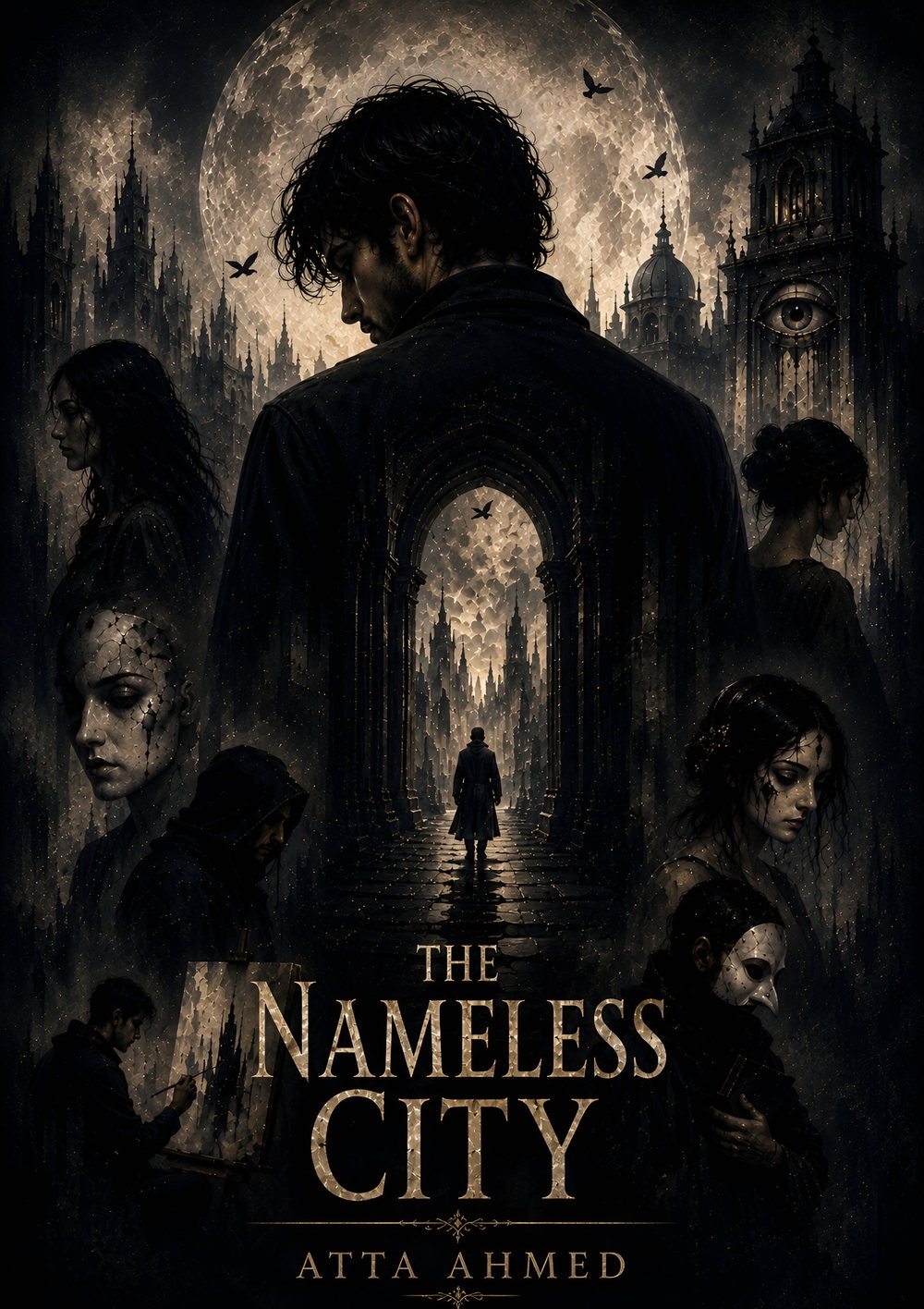
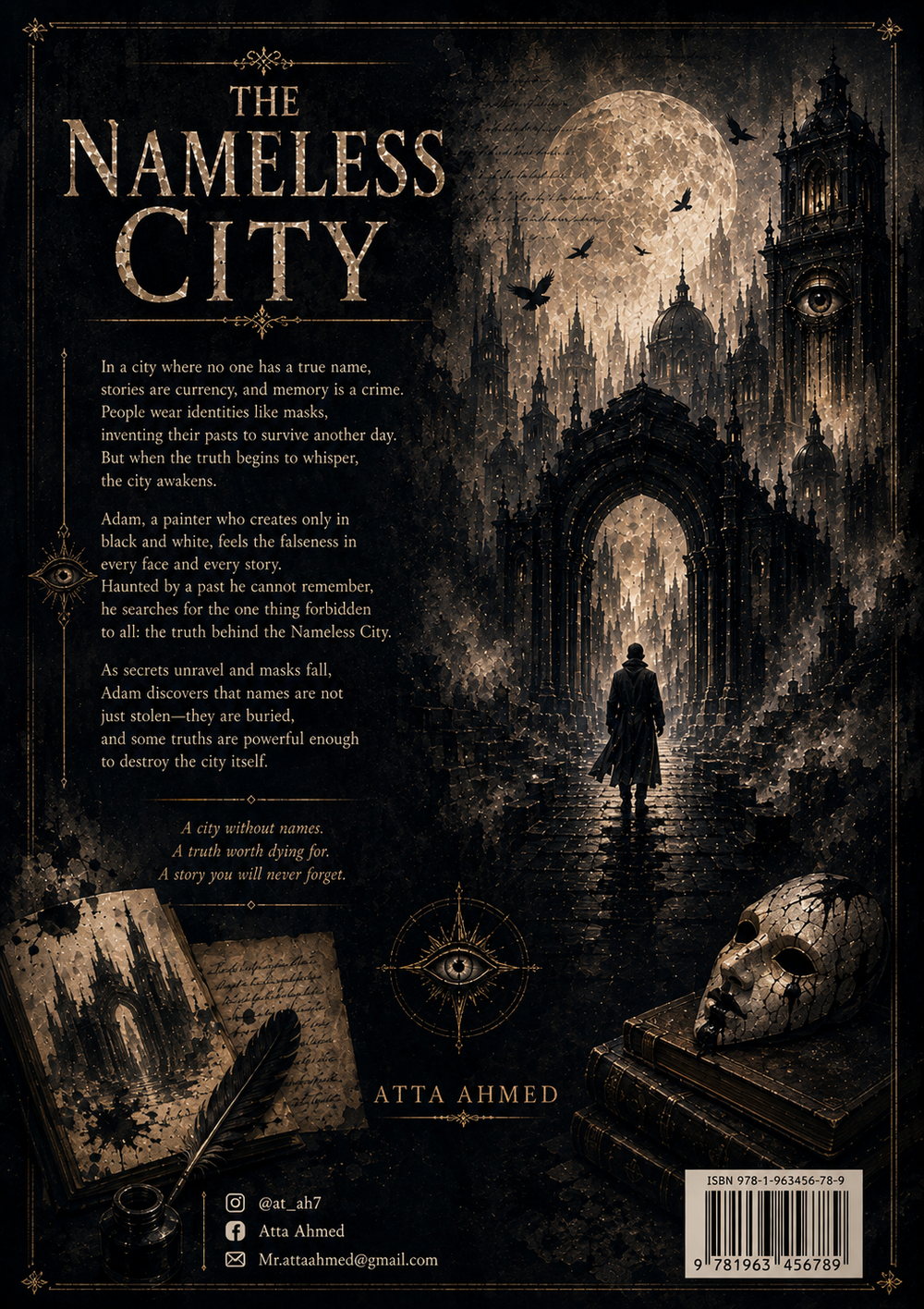
The Nameless City
مدينة بلا أسماء
A novel of psychological mystery and philosophical fantasy Pre-order the novel
In a city that can take your name, your memories and your story from you, a painter with no past sets out to recover his identity — before discovering that the most dangerous question is not who he is, but who holds the right to decide it.
When memory becomes power, remembering becomes an act of resistance.
- Genre
- A novel of psychological mystery and philosophical fantasy
- Length
- 22 chapters
- Status
- Complete
- Author
- Atta Ahmed
The novel is not part of The Evolution of English Literature and is not included in the programme.
About the novel
In a city whose streets carry no fixed names, and whose people hold no certainty about their own past, identity becomes something that can be altered, and memory a privilege that may be granted to a person or taken from them.
At the heart of this city lives Adam — an enigmatic painter who has lost his memory, who knows nothing true about his past, and who sees the world only in black, white and the greys between. No birth certificate, no clear record, and nothing tying him to what came before but scattered fragments of dreams, of nightmares, and of the paintings he makes.
But strange symbols appearing inside his canvases, unsigned letters, and a mysterious woman named Rital push him to go looking for the truth.
The closer he comes to it, the more the question stops being who am I? and becomes who holds the right to decide who I am?
And so begins Adam's journey through the hidden layers of the city, where memory is entangled with power, truth with narrative, and love with fear — and where the search for a past becomes a confrontation with an entire system built on controlling what people remember and what they are permitted to forget.
The idea behind it
The Nameless City takes up the idea of human identity through a fictional world resting on one central philosophical question: if someone can control your memory, can they control who you are?
The novel does not treat memory merely as the retrieval of a past, but as the ground on which a person, their choices, their relationships and their view of themselves are built.
Through Adam's journey the question widens by degrees — from the search for one individual's memory into a struggle over a person's right to own their own story.
The world of the Nameless City
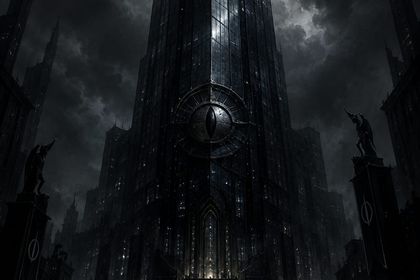
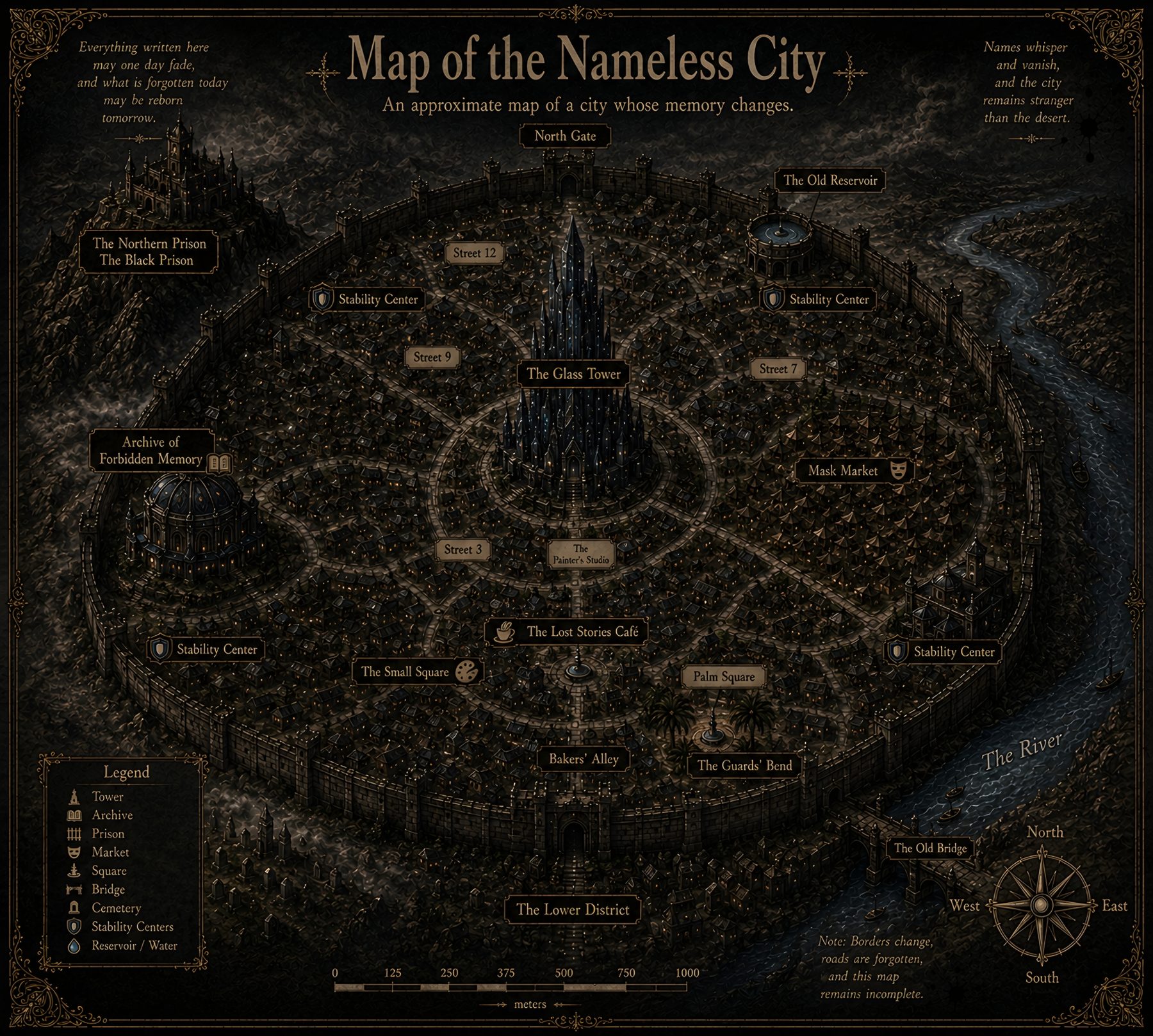
The novel unfolds inside a city with laws and places of its own, where the setting itself becomes part of the telling.
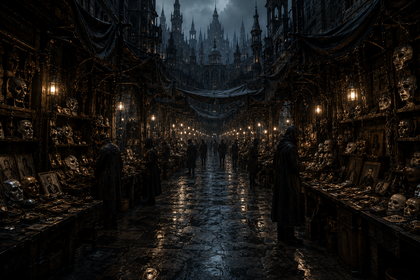
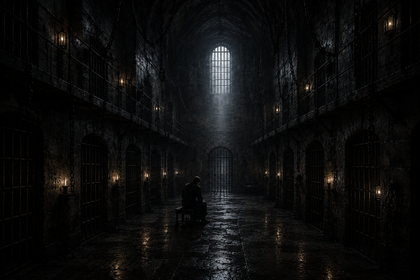
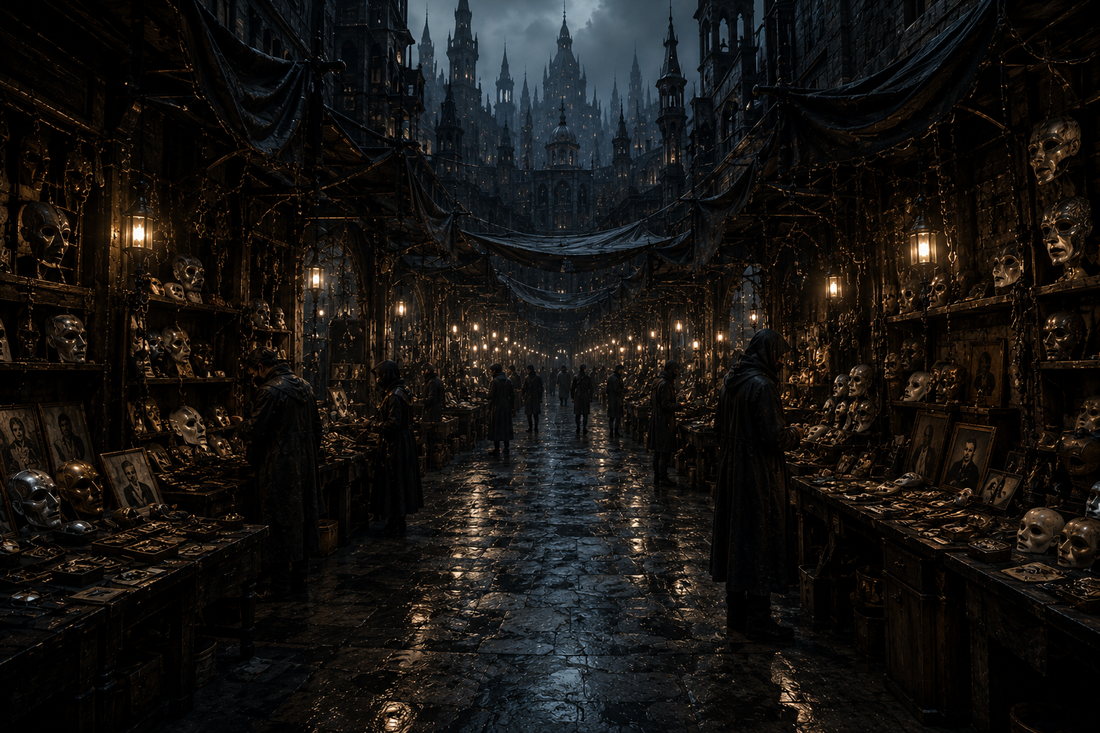
A place where masks and identities are sold and exchanged as though they were ordinary goods.
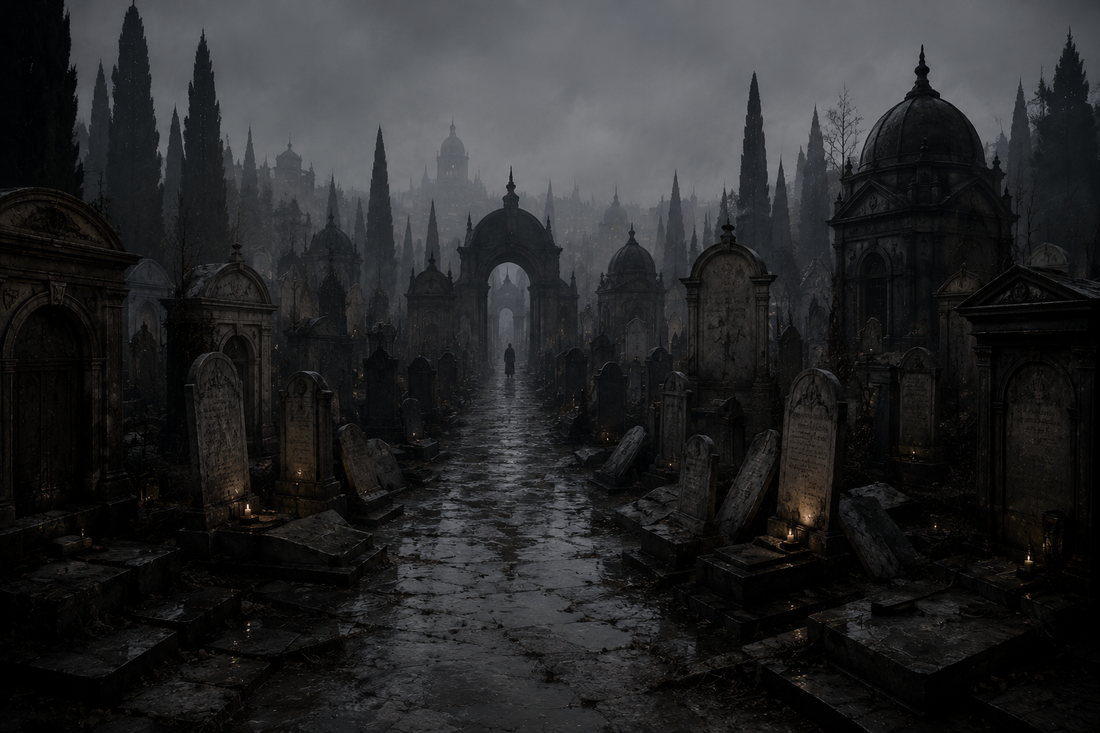
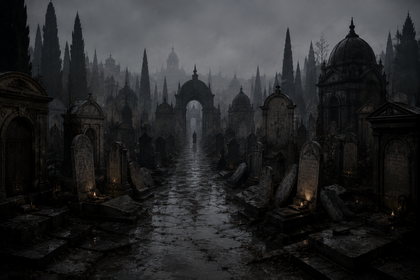
A place where what is buried is less the body than the traces of forgotten identities.
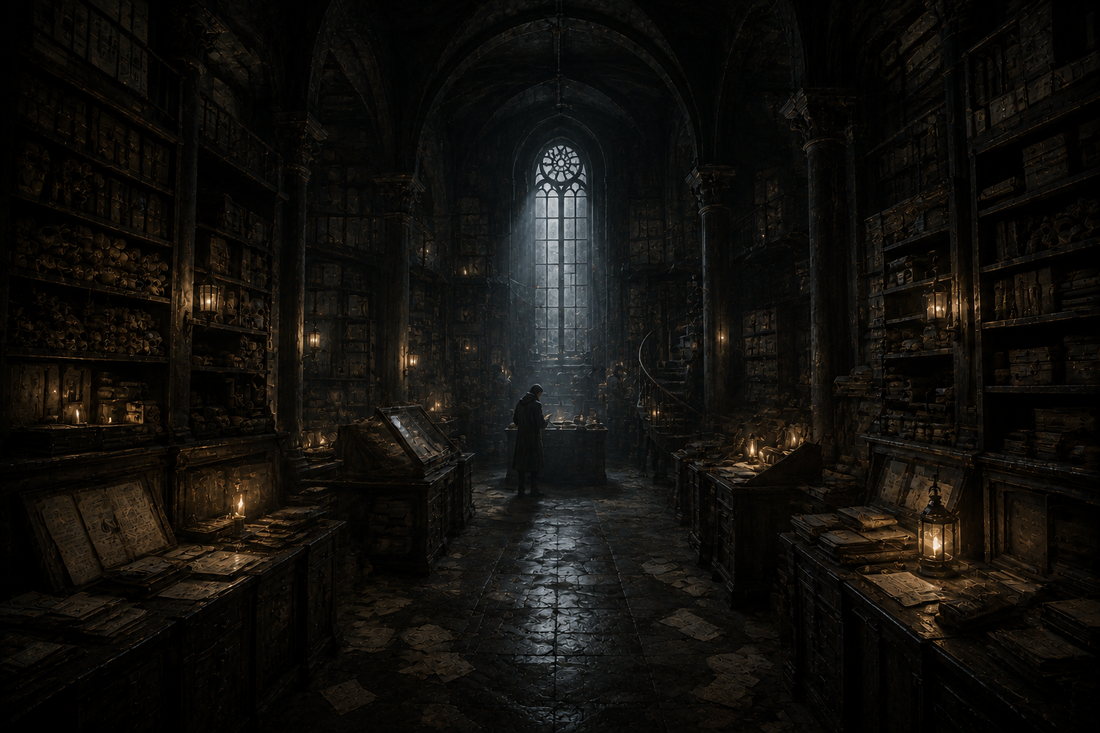
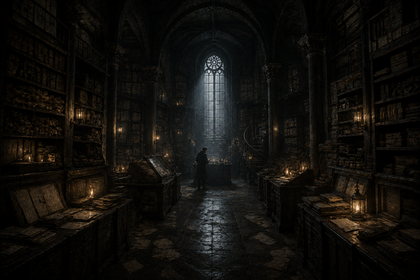
The site bound up with the memories that were erased, or that no one is allowed to reach.
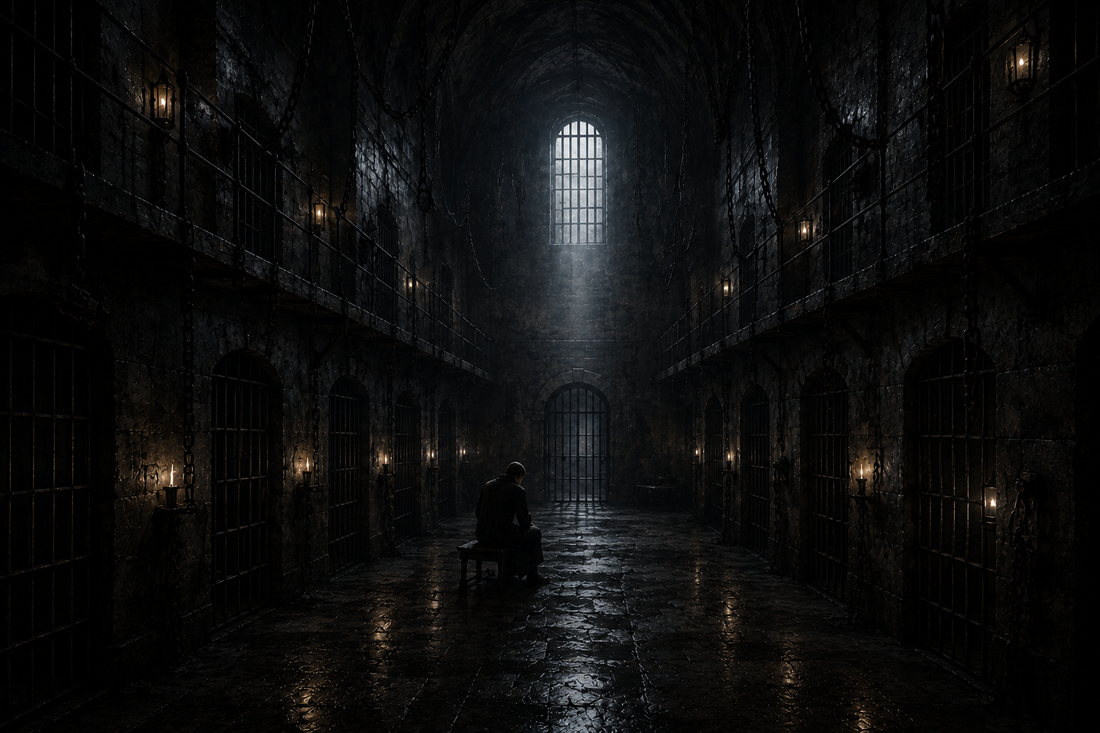
One of the places tied to those whose very existence became a danger to the city's official account of itself.
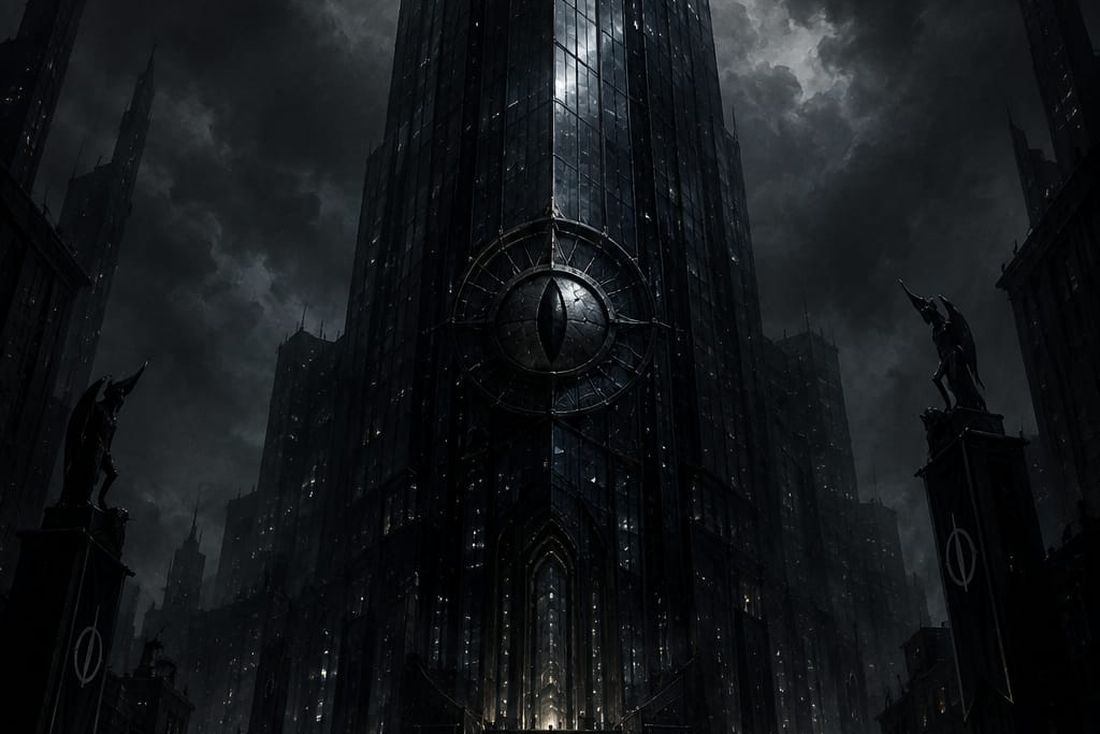
The most dangerous centre in the city: authority, the records and the control of memory all meet in it. The Great Register sits at its summit, which makes reaching it the axis of the struggle between Adam and his companions and the Keeper of Tales, Black, and the order that rules the city.
The city
The principal characters
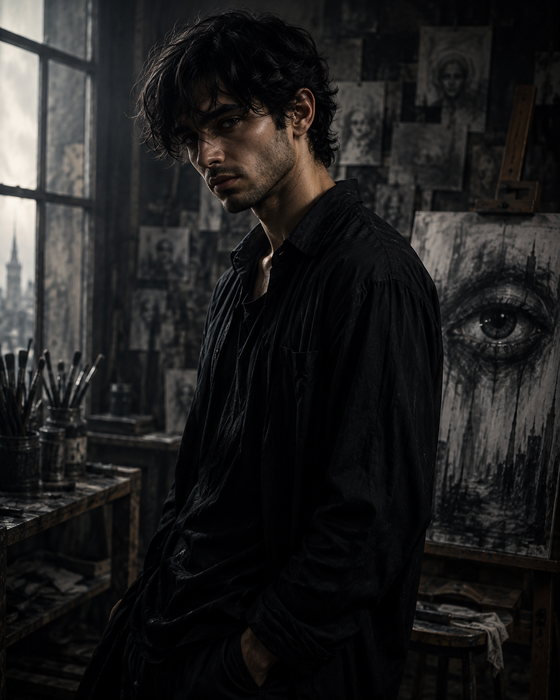
The novel's protagonist. A painter without memory who lives his world in black and white. He sets out looking for his past, and discovers that knowing the truth lays on him a responsibility greater than simply recovering it.
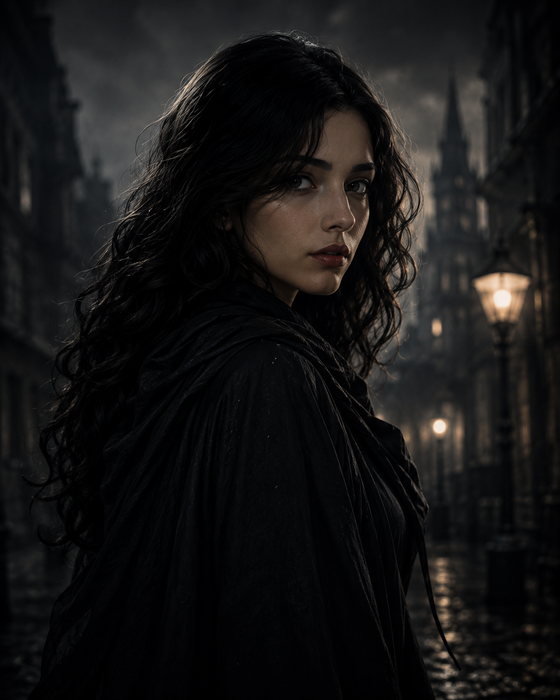
An enigmatic figure bound deeply to Adam's past and to his memory. Her relationship with him becomes one of the novel's hardest moral and emotional tests — over love, over protection, and over a person's right to own their own memory.

A writer and Adam's friend. He carries the human, living side of a very dark world, and grows by degrees from the hero's companion into someone searching, in his turn, for the right not to be merely a role inside another person's story.

A figure tied to the uncovering of one side of the system's truth. She plays an important part in widening Adam's understanding of the relation between narrative and power.

Bound to knowledge, to the archive and to testimony. Hers is one of the most important voices arguing over how the truth may be kept without turning it, once again, into an instrument of control.
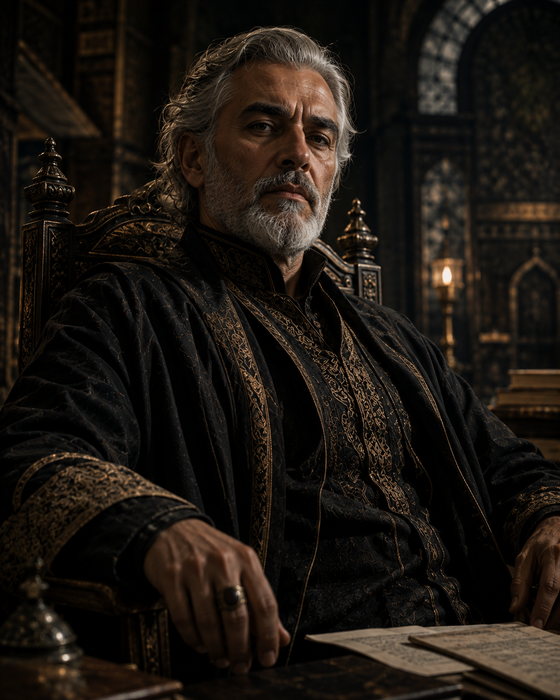
One of the novel's most important figures and Adam's principal intellectual adversary. He does not see himself as a villain but as the man who saved the city from chaos. He believes an unregulated memory can destroy a society, and so finds control an acceptable price for stability.
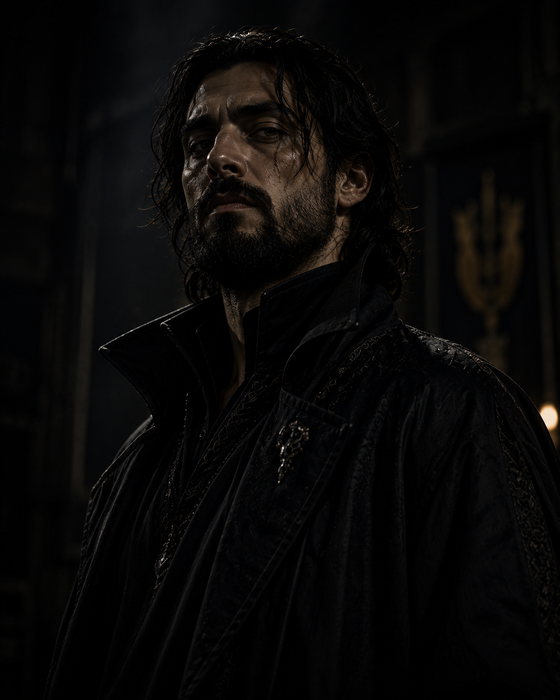
The cruellest and most extreme face of authority, for whom protecting the system turns into an end in itself — even if its survival requires destroying the very thing the system was built to protect.
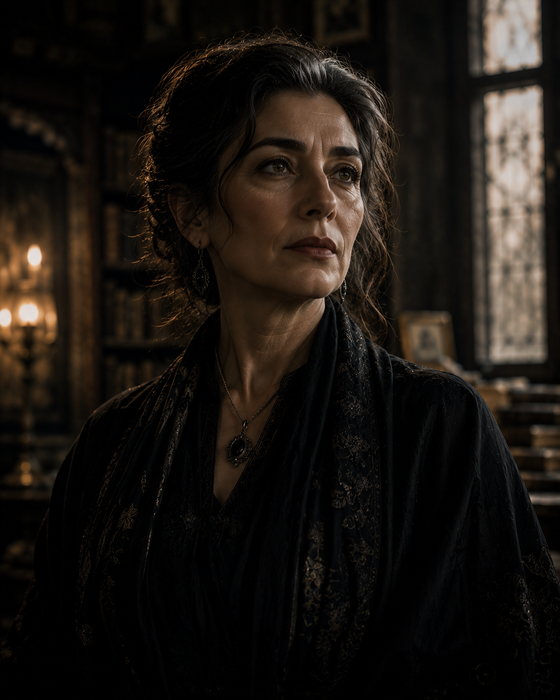
Adam's mother, and the woman whose presence stayed lodged deep in his memory despite every attempt to erase his past. In the novel she stands for motherhood, for original memory and for belonging, and she is one of the most important keys to understanding who Adam really is.
What the novel argues about
Are we our names, our memories, or our choices?
Is owning a past necessary in order to know oneself?
Is there one truth, or a set of testimonies each carrying part of it?
What happens when control moves from the body to the memory?
Is freedom knowing everything, or holding the right to choose?
When does protection turn into control?
How can a wrongdoer be held to account without using their own tools?
Who holds the right to write a person's story?
The symbolism of colour
Colour is one of the novel's most important symbolic threads. At the start, Adam can meet the world only through black, white and grey.
As his journey develops, colours begin to take on meanings bound to memory, to freedom and to human relationships.
And at the end the painting turns from something one person makes into a space others help to shape — and Adam leaves part of it empty:
No. I have not forgotten it. I left it for those who come after us.
And here one of the novel's central ideas reaches its end: no one holds the right to write the last story on everyone's behalf.
What the title means
The title carries two different meanings across the novel.
At first, The Nameless City stands for a world in which a person has lost part of their identity, and in which names and memories have become subject to alteration and to control.
But the meaning of the title changes as the events develop. For the city to be «nameless» no longer means that it has no identity; it means that it refuses to be reduced by any one person to a single name, a single truth, or a single final account.
Who it was written for
- Psychological novels
- Mystery
- Dark fantasy
- Symbolic worlds
- Novels of ideas
- Secrets uncovered by degrees
- Work that leaves the reader room to interpret rather than answering everything outright
The covers
Learn MoreThink BetterCreate MoreGo FurtherStay CuriousKeep LearningThink AheadDream Bigger
Fiction
The Nameless City
When memory becomes power, remembering becomes an act of resistance.